If you drive a van, you have probably been asked 'is it a Class 4 or a Class 7?' when booking an MOT, and it is a fair question to be unsure about. The two tests look the same from the driver's seat, but not every MOT station can do both, and turning up with a Class 7 van at a Class 4 only garage means a wasted trip.
The answer comes down to one number: the design gross weight (DGW) of your vehicle. This guide explains what each class covers, where to find that number on your van, and what it means for booking a test in Leeds. Everything on vehicle classes below is taken from the DVSA MOT inspection manual and GOV.UK.
What Class 4 covers
Class 4 is the everyday test. The DVSA MOT inspection manual lists it as covering cars and taxis, minibuses, motor caravans, dual purpose vehicles and ambulances up to 12 passenger seats, quadricycles, three-wheelers over 450kg unladen weight, and goods vehicles not exceeding 3,000kg design gross weight.
That last line is the one that matters for van drivers. A small or medium van with a design gross weight of 3,000kg or under is a Class 4 vehicle and takes the same test as a car. Pickups and crew cabs can be treated as dual purpose vehicles too, which keeps them in Class 4, and the manual notes that 4x4 pickup and crew cab types with a DGW over 3,000kg up to and including 3,500kg are considered dual purpose for test purposes if the unladen weight is not available.
- Cars and taxis
- Minibuses, motor caravans, dual purpose vehicles and ambulances up to 12 passenger seats
- Goods vehicles up to and including 3,000kg design gross weight
What Class 7 covers
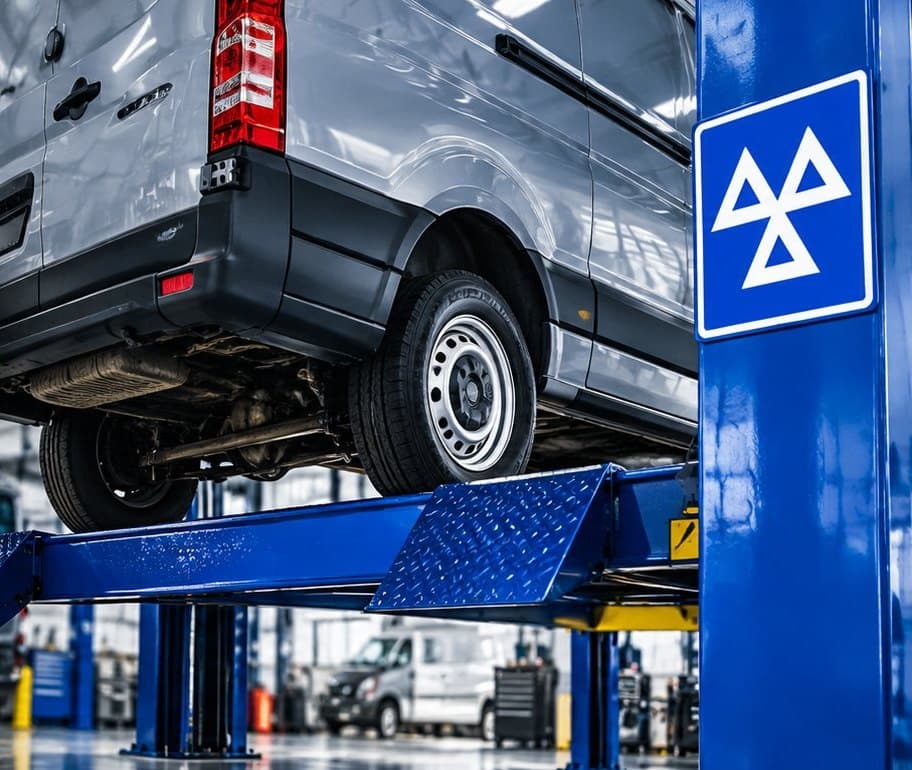
Class 7 is for heavier light commercials. The inspection manual defines it as goods vehicles between 3,001kg and 3,500kg design gross weight inclusive. In practice that means the larger panel vans, high-roof and long-wheelbase vans, dropside and tipper conversions, and most vans used for serious carrying work.
There is one extension worth knowing about. The manual also includes zero emission goods vehicles between 3,501kg and 4,250kg DGW in Class 7. The DVSA defines a zero emission vehicle here as one without an internal combustion engine, or with an engine that has CO2 emissions of zero grams per kilometre, and it specifically does not include hybrids of any kind, including range extenders. So an electric van that has been plated above 3,500kg to allow for its battery weight still gets a Class 7 test, but a diesel or hybrid van of that weight does not.
- Petrol, diesel and hybrid goods vehicles from 3,001kg to 3,500kg design gross weight
- Zero emission goods vehicles from 3,501kg to 4,250kg design gross weight
Where to find the design gross weight
GOV.UK explains that the maximum authorised mass, also known as gross vehicle weight or permissible maximum weight, is the weight of the vehicle including the maximum load, and that it is listed in the owner's manual and normally shown on a plate or sticker fitted to the vehicle. On most vans that plate is in the driver's door frame, under the bonnet or on the sill, often near the VIN.
The plate usually shows several weights. The first and highest figure on its own is normally the gross vehicle weight you want. Figures that follow are typically the gross train weight (vehicle plus trailer) and the individual axle limits, which are not what the MOT class is based on. If your vehicle carries both a manufacturer's plate and a ministry plate, the inspection manual says the weights on the ministry plate are the ones used.
Your V5C log book is the other place to look, and the handbook is a third. If the plate is unreadable and the paperwork is unclear, give us a call and we can usually work it out from the registration before you set off.
- Look for the manufacturer's plate in the door frame, under the bonnet or on the sill
- The gross vehicle weight is normally the first figure, given in kg
- Where a ministry plate is fitted, that plate's weights take priority
Common vans by weight band
Rather than list models, which change with every facelift and body option, it is safer to think in bands. Car derived vans and small city vans almost always sit well under 3,000kg and are Class 4. Medium vans are where it gets interesting: the same basic van can be sold with a design gross weight either side of the 3,000kg line depending on the wheelbase, roof height and payload option chosen, so two vans that look identical on the outside can need different tests.
Large panel vans, Luton bodies, dropsides, tippers and most minibus-sized vans are built to the 3,500kg limit, which is the most you can drive on a standard car licence, so they are nearly always Class 7. The only way to be certain is to read the plate, and it takes thirty seconds.
Fees, timing and retests
The test itself follows the same rules whichever class you are in. GOV.UK says you must get an MOT by the third anniversary of registration, then every year, and an MOT lasts for a year. The free GOV.UK check MOT status service tells you when a vehicle's current certificate runs out from the registration number alone.
On cost, GOV.UK sets a legal maximum that any test centre can charge. For Class 4 goods vehicles up to 3,000kg DGW and cars the maximum is £54.85, and for Class 7 petrol, diesel and hybrid goods vehicles over 3,000kg up to 3,500kg DGW, and zero emission goods vehicles from 3,501kg to 4,250kg, it is £58.60. No VAT is charged on the fee. Those are ceilings set by law, not a price list, so ask your garage what it charges when you book.
If the van fails, GOV.UK's retest rules apply equally to both classes. Leave it at the test centre for repair and have it retested within 10 working days and there is no fee. Take it away and bring it back within 10 working days and you can be charged a partial retest fee. Beyond that you need a full retest and pay the full fee again.
Booking the right test in Leeds
Not every MOT station is approved for Class 7, because the heavier vans need a bay and equipment rated for them. NHG Vehicle Care at Unit 2, 2 Dolly Lane in Harehills tests both Class 4 and Class 7, so whether you turn up in a car derived van or a fully plated 3,500kg panel van, you are in the right place.
If you are still not sure which class your van is, do not worry. Tell us the registration when you book and we will confirm it before you arrive. We are open Monday to Friday, 8:30am to 5:30pm. Call 0113 244 3544 or request a booking online and we will find you a slot.