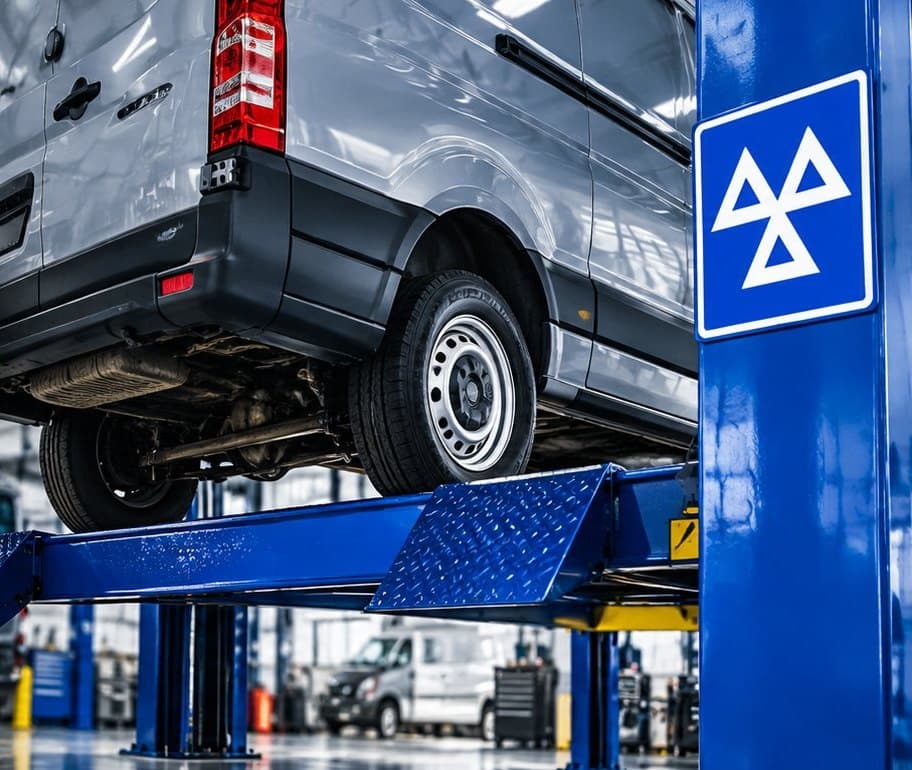
Class 7 is the MOT class for goods vehicles with a design gross weight of more than 3,000 kg and up to 3,500 kg: the larger panel vans, Luton vans, dropsides and tippers that many trades and delivery drivers rely on. Not every van needs a Class 7 test, so it's worth checking your vehicle's plate before you book.
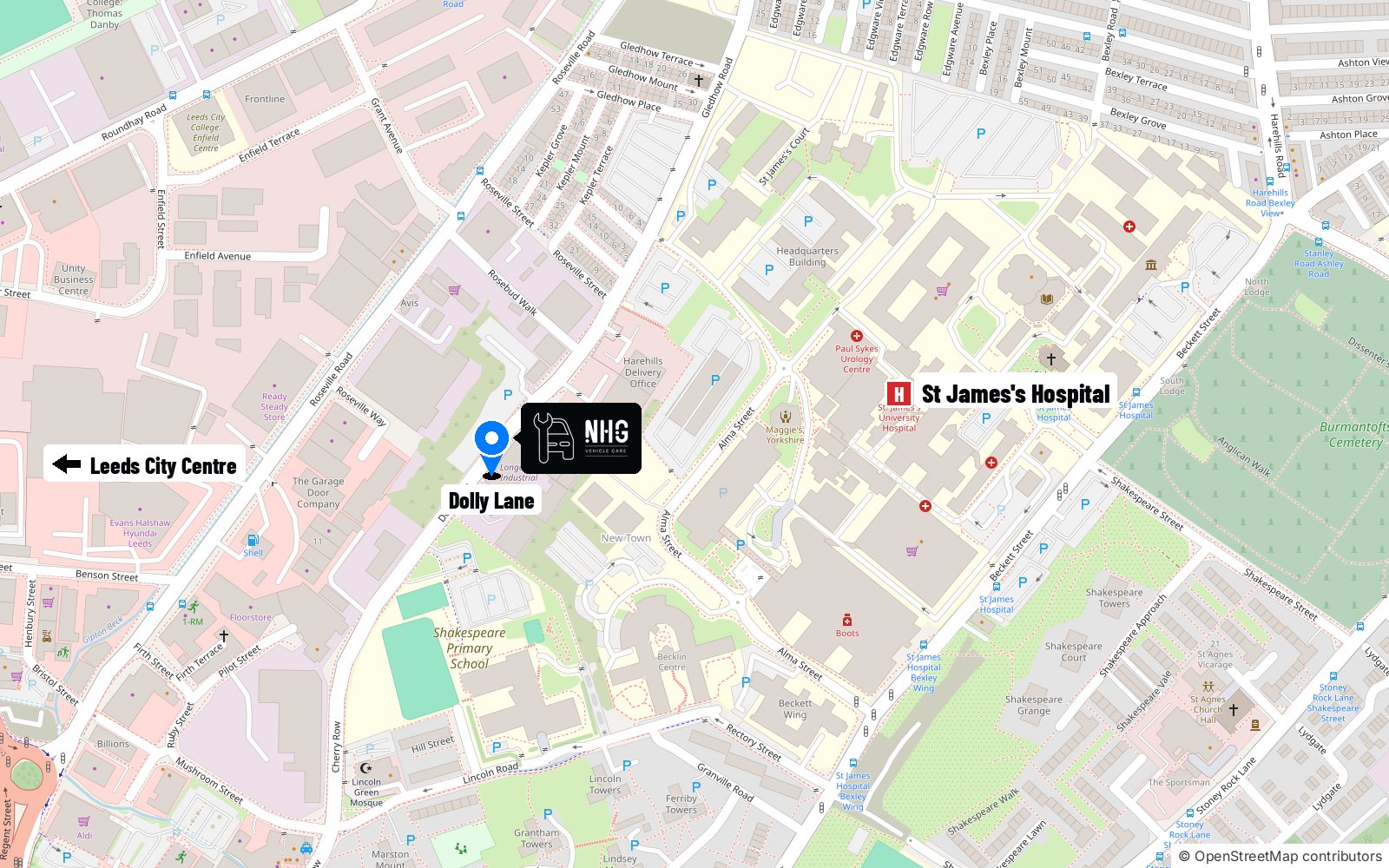
Class 7 testing needs a larger test bay and brake-testing equipment rated for heavier vehicles, which is why not every garage offers it. NHG Vehicle Care tests Class 7 as well as Class 4 at our workshop on Dolly Lane, Harehills, and if your van needs work to pass we can usually carry it out on site.
Which class is my van?
The class depends on the design gross weight (also called the gross vehicle weight or maximum authorised mass), not on how big the van looks or what it weighs on the day. Two ways to find it:
- The manufacturer's plate (VIN plate), usually inside the driver's door frame, on the door pillar or under the bonnet. The first and highest figure in the list of weights is the gross vehicle weight.
- Your V5C logbook, which shows the same figure as the maximum permissible mass or revenue weight.
If that figure is over 3,000 kg and up to 3,500 kg, your van needs a Class 7 MOT. If it is 3,000 kg or less, it needs a Class 4 MOT, the same test as a car. Many popular models are sold in versions either side of the 3,000 kg line, so check the plate rather than assuming from the model name.
Vans over 3,500 kg are not covered by the MOT at all: they fall under the DVSA's annual HGV test instead, which we don't carry out.
What the Class 7 test checks
The Class 7 test inspects the same items as a Class 4 test, carried out on equipment suited to the vehicle's weight:
- Brakes: condition, operation and performance
- Tyres and wheels: condition, size, type and tread depth (at least 1.6 mm)
- Lights, indicators, reflectors and headlamp aim
- Steering and suspension
- Seatbelts and seats
- Body, structure and general items, including corrosion and sharp edges
- Windscreen, wipers and washers
- Mirrors, horn and number plates
- Exhaust system and exhaust emissions
- Fuel system, including leaks and the fuel cap
- Doors, bonnet and boot catches
- Electrical: battery, wiring, towbar electrics and the warning lights on the dashboard
- Vehicle identification number (VIN)
It does not cover the engine, clutch or gearbox. Our main MOT page explains who needs a test and when, and what happens after a fail, in more detail.
Booking a Class 7 MOT
Request a booking online or phone us, and tell us it's a Class 7 so we can book the right bay. You can have the test done up to a month (minus a day) before your current certificate expires and keep the same renewal date.
Preparing for the test
Many fails are for simple things you can check yourself in five minutes before you set off:
- Lights: headlights, sidelights, brake lights, indicators, fog lights, reversing lights and number-plate lights all working, with no cracked or discoloured lenses
- Tyres: at least 1.6 mm of tread across the central three-quarters of the tyre and around its whole circumference, no cuts, bulges or exposed cords, and the correct pressures
- Wipers and washers: blades that clear the screen without smearing, and a full washer bottle
- Horn: sounds properly
- Number plates: present, secure, legible and in a legal font and spacing
- Warning lights: no engine management, ABS, airbag, brake or power-steering lights staying on
- Mirrors: both door mirrors and the interior mirror secure and intact
- Seatbelts: pull each one out fully, check for frays and cuts, and make sure it latches and retracts
- Fuel and oil: enough fuel and oil for the emissions test to be carried out (the tester can refuse to test a vehicle without them)
- Windscreen: no chips or cracks in the driver's line of sight bigger than the DVSA limits (10 mm in the swept area in front of the driver, 40 mm elsewhere)
Bring the van as empty as you reasonably can. A heavy load makes the brake test harder to carry out, and loose items in the back or on a dropside can count as a load-security fail. Also make sure the boot, bonnet and all doors open, and that the vehicle is reasonably clean so the tester can inspect it.
If your vehicle fails
Every problem the tester finds is recorded in one of four categories, which is what decides whether the vehicle passes or fails:
- Dangerous: a direct and immediate risk to road safety or the environment. The vehicle fails and must not be driven until it has been repaired.
- Major: may affect safety, put other road users at risk or harm the environment. The vehicle fails and should be repaired as soon as possible.
- Minor: no significant effect on safety or the environment. The vehicle passes, but the defect is noted and should be fixed.
- Advisory: something to keep an eye on that could become more serious later. The vehicle passes.
A fail with dangerous or major defects is recorded on the DVSA database straight away. If your old certificate is still in date you may still drive the vehicle while the defects are put right, but not if any defect is dangerous.
Retests follow the DVSA rules. If the vehicle stays with the test centre for repair and is retested within 10 working days, only the failed items need to be checked again (a partial retest). If you take it away and bring it back within 10 working days, a partial retest is only possible for certain items such as lights, tyres, wipers, mirrors, seatbelts, horn, number plates and doors; anything else needs a full test again. Whether a retest fee applies depends on which of those rules you fall under, so ask us when you book.
Request a booking online or call us on 0113 244 3544 and we’ll find a time that suits you.
Advice from our workshop
All advice articles