If you drive a modern diesel, there is a filter in the exhaust you probably never think about until an orange light appears on the dashboard. That is the diesel particulate filter, or DPF, and the light means the car is struggling to keep it clear. Ignore it and you are looking at lost power, limp mode and a repair bill that could have been avoided.
Here is what the DPF does, why stop-start driving around Leeds blocks it, what the light means, how regeneration works, when a professional clean is needed, and why having the filter removed is no shortcut.
What a diesel particulate filter does
A DPF is a device fitted to diesel vehicles that removes particulate matter, the fine soot, from the exhaust gases. GOV.UK describes it as a technology in use for over 20 years that helps diesels meet European emission standards. It is not a sieve that empties itself: it traps the soot, and the soot has to be burned off regularly.
GOV.UK puts it plainly: DPFs need to be emptied regularly through a process called regeneration, which burns the soot off at very high temperature. When regeneration does not happen properly, soot builds up, performance drops and the result can be expensive repairs.
Why short urban trips block it
Regeneration needs heat, and heat comes from sustained driving. A diesel that spends its life on the school run, nipping to the shops in Harehills or crawling round the inner ring road rarely gets its exhaust hot enough for long enough to burn the soot off. Each short trip adds to the filter and takes nothing away.
The cars we see with DPF problems are usually low-mileage diesels doing lots of short, cold journeys around the city, not motorway cars.
What the DPF warning light means
The DPF light comes on when the soot level has reached a point the car wants cleared and it has not managed to do it on its own. It is asking for the conditions for a regeneration, which normally means a sustained drive rather than another five-minute hop. Your handbook will describe what your car needs.
Ignore it and the next stage is usually an engine warning light too, reduced power or limp mode, and a car that can no longer regenerate by itself because the soot load is too high. Driving it further will not fix it.
The MOT cares too. The DVSA inspection manual says that on diesels first used on or after 1 July 2008 an engine malfunction indicator lamp that is inoperative or indicating a malfunction is a major defect, which means a fail.
- DPF light only: the filter is full and the car is asking for a regeneration drive
- DPF light plus engine light or reduced power: get it checked before driving much further
- Light that keeps coming back: something is stopping regeneration and needs diagnosing
Passive and active regeneration
Passive regeneration happens on its own when the exhaust is hot enough for long enough, typically on a steady run rather than in traffic. The soot simply burns off as you drive and you never notice.
Active regeneration is the car taking matters into its own hands. When the engine control unit sees the filter loading up, it deliberately raises the exhaust temperature, usually by changing the fuelling, to burn the soot off. You might notice a higher idle, the cooling fan running or a hot smell. Try not to switch off halfway through: an interrupted regeneration is one of the commonest reasons the light comes on.
Forced regeneration and professional DPF cleaning
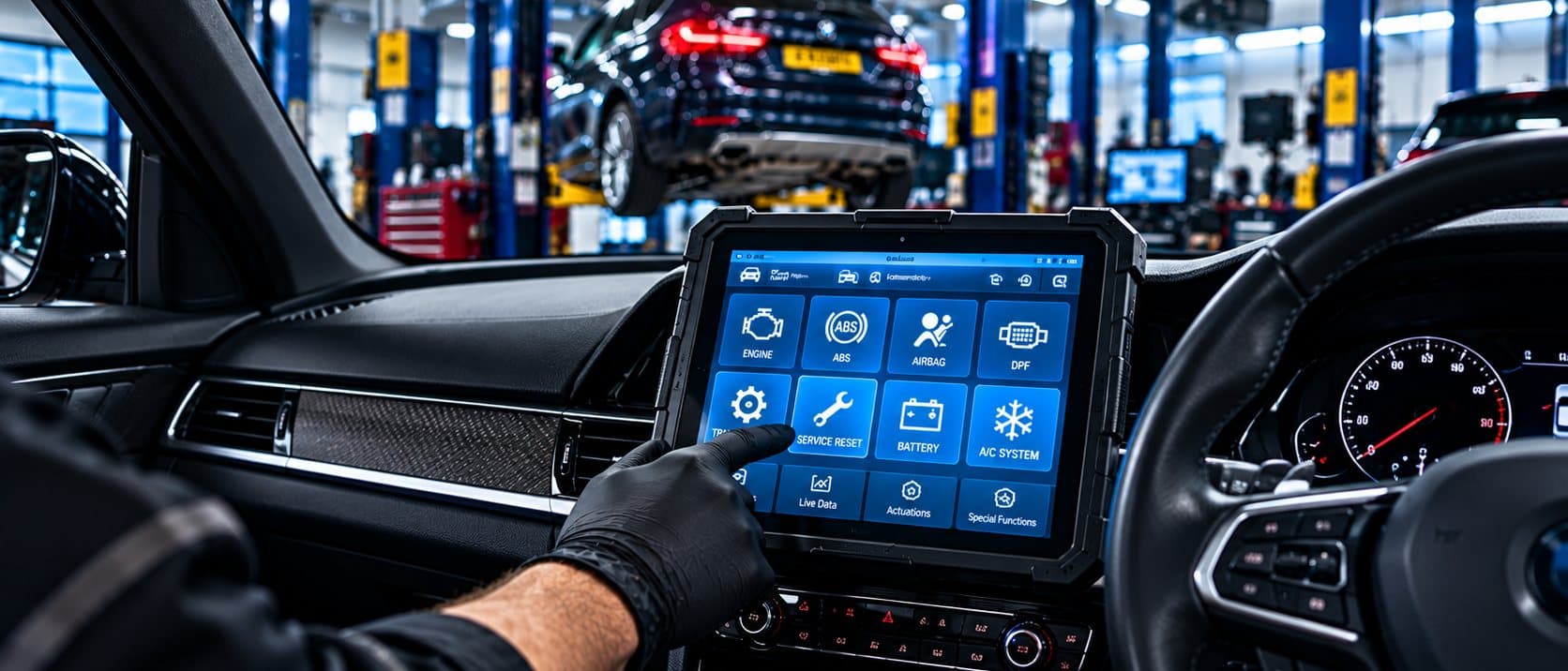
If the soot load is past the point where the car can regenerate itself, a garage can connect diagnostic equipment and start a forced regeneration with the car stationary. Before that, a good technician checks why the filter blocked, because a DPF rarely fails on its own. A faulty sensor, a sticking EGR valve, a glow plug fault or the wrong engine oil can all stop regeneration, and clearing the filter without fixing the cause means you will be back.
When the filter is too blocked for a forced regeneration, or loaded with ash rather than soot, the next step is a professional DPF clean, which is far cheaper than a new filter. The DVSA inspection manual says a tester should reject a DPF that has clearly been cut open and rewelded unless the presenter can show evidence of a valid reason, such as filter cleaning, so keep the paperwork from any clean that involved opening the filter.
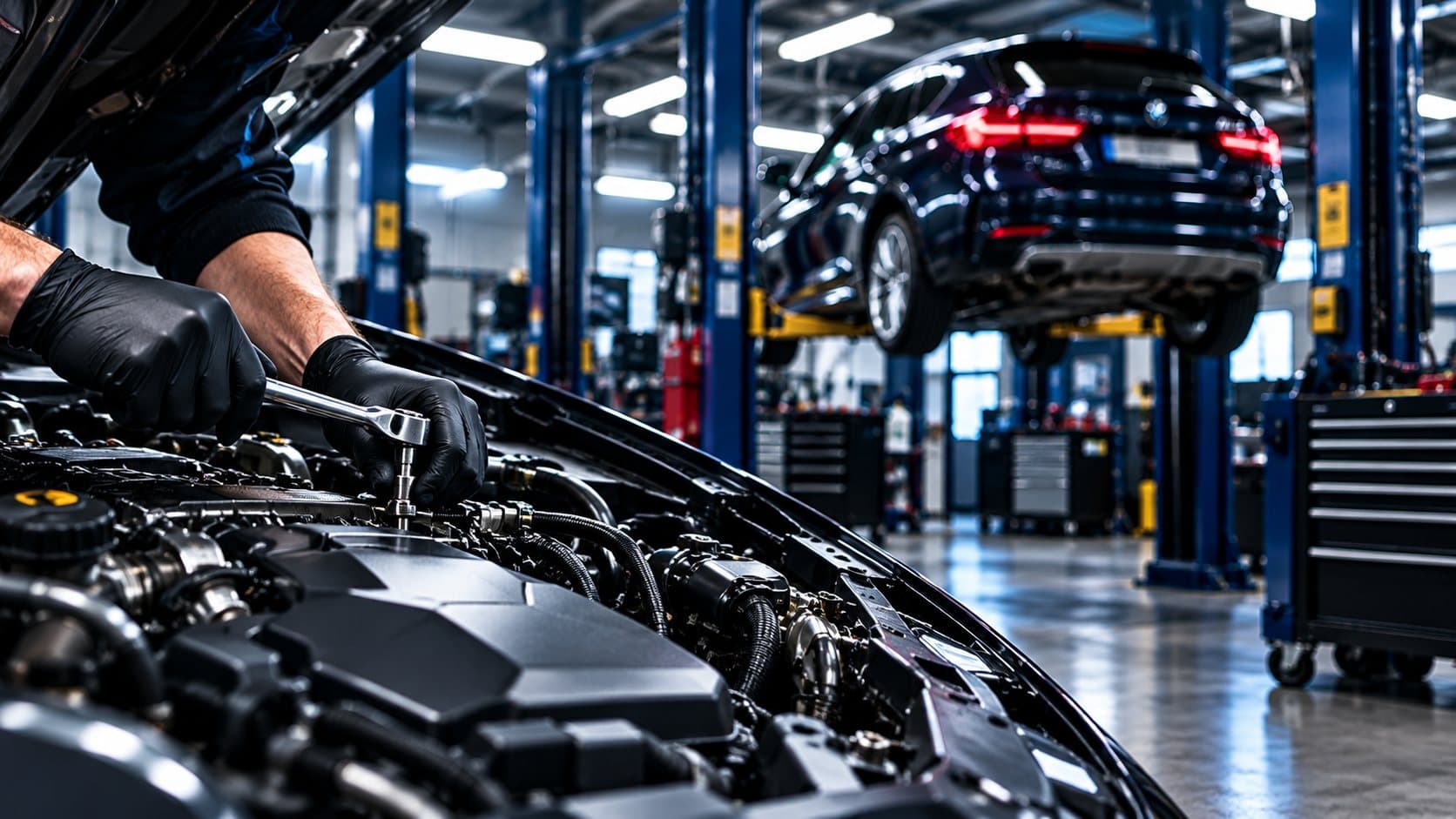
At NHG Vehicle Care in Leeds we offer DPF cleaning alongside full diagnostics, so we can read the fault codes, check the sensors and tell you whether the filter needs a regeneration, a clean, or whether something else is causing the problem.
Removing the DPF: an MOT fail and an offence
Having the DPF cut out and the software mapped to ignore it is sometimes offered as a cheap fix. It is not legal. GOV.UK states that using a vehicle modified so it no longer meets the emission standards it was designed to meet is an offence under Regulation 61a(3) of the Road Vehicles (Construction and Use) Regulations, and that removal of a DPF will almost invariably contravene these requirements. The penalties GOV.UK quotes are a fine of up to £1,000 for a car or £2,500 for a light goods vehicle.
It also fails the MOT. Since February 2014 the MOT exhaust inspection has checked for the presence of a DPF, and GOV.UK says a missing filter where one was fitted when the vehicle was built results in an MOT failure. The DVSA inspection manual lists manufacturer-fitted emission control equipment that is missing, obviously modified or obviously defective as a major defect, and evidence that the DPF has been tampered with as another. Visible smoke of any colour from a DPF-equipped vehicle is a major defect too. Any major defect is a fail.
GOV.UK says you can only take a failed vehicle away if your current MOT is still valid and no dangerous problems were listed, and driving without a valid MOT can mean a fine of up to £1,000. Leave it at the test centre for repair and have it retested within 10 working days and there is no fee for the partial retest.
DPF cleaning and diagnostics in Leeds
The cheapest DPF repair is the one you do early. If the light has just come on, a proper run may clear it. If it keeps coming back, or there is an engine light or loss of power with it, the car needs diagnosing before only a clean or a replacement will do.
NHG Vehicle Care is at Unit 2, 2 Dolly Lane, Harehills, Leeds LS9 7TU, open Monday to Friday 8:30am to 5:30pm. We carry out DPF cleaning, forced regenerations and diagnostics on diesel cars and vans, and we will tell you honestly whether the filter is the problem or just the symptom. Call us on 0113 244 3544 or request a booking online.