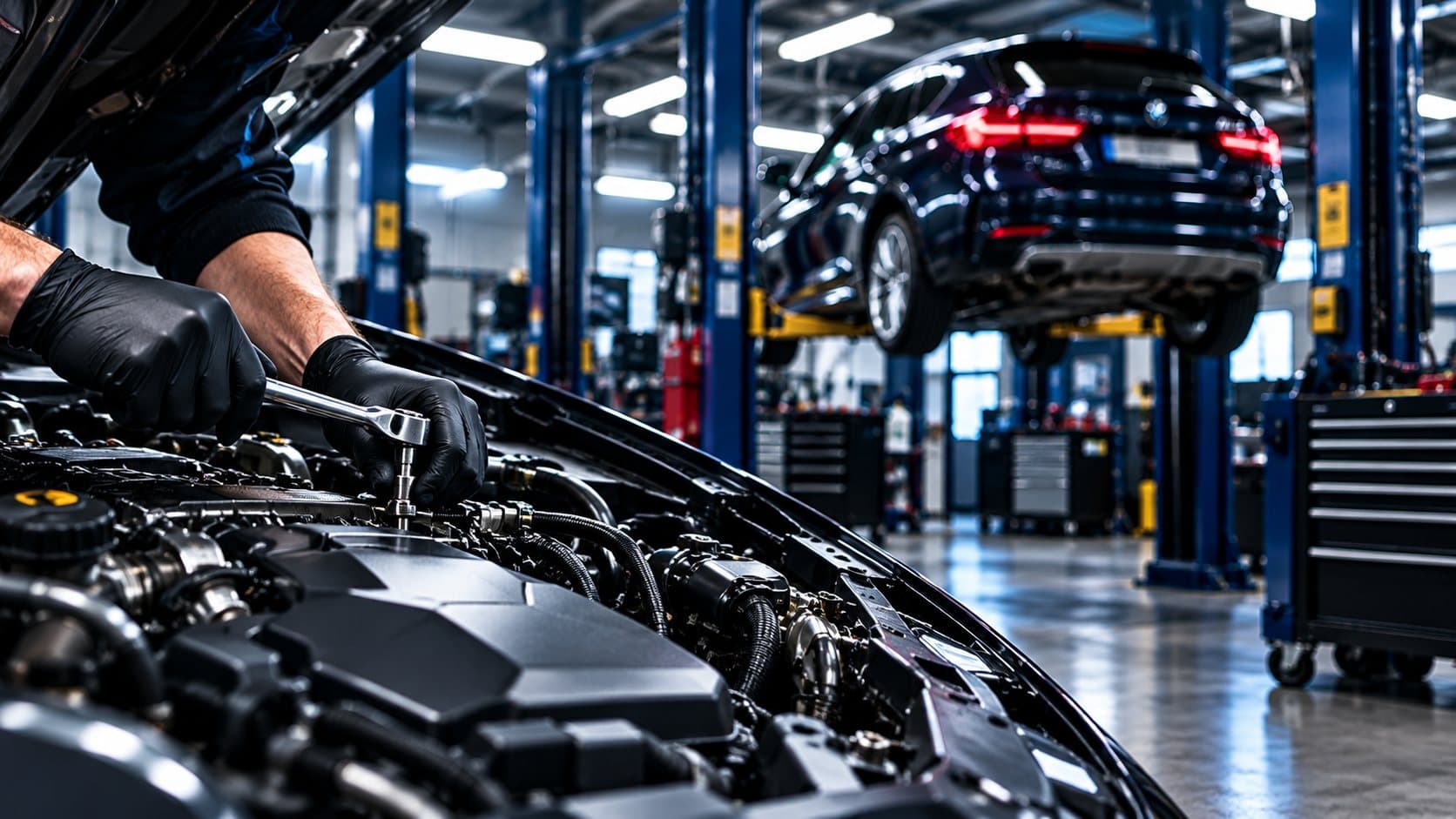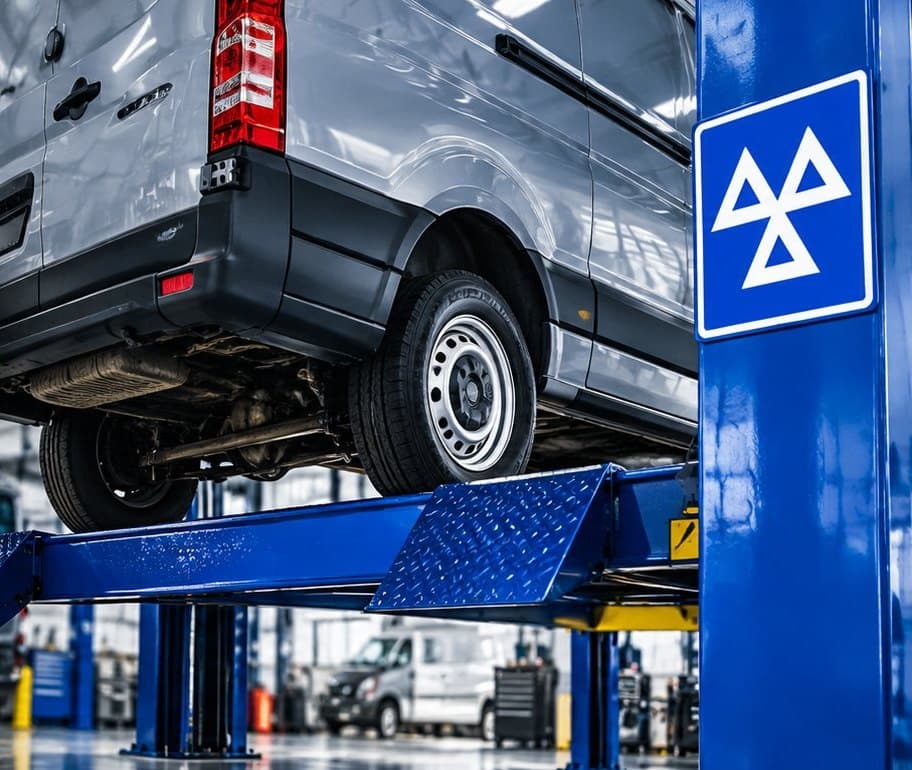
Corrosion is one of the MOT failures drivers understand least. A car with scabby arches can sail through while a tidy one fails on rot the owner has never seen, because the tester is not judging looks. The DVSA inspection manual is about strength, and it is strictest around the points where the brakes, steering, suspension and seat belts bolt to the body.
This guide explains the rule the tester works to, where corrosion bites on cars driven through Leeds winters, what a passing repair looks like, and why a plate or filler will not get you through.
Why rust fails an MOT (and why some rust does not)
Appendix A of the DVSA MOT inspection manual sets the principle: the effect of corrosion on the safety of a vehicle depends on its extent and the function of the section. It states that excessive corrosion on non-structural sections may have little or no effect, so a rusty wing or bubbling tailgate is a cosmetic problem, not a test problem.
Away from the critical zones, section 6.1.1 only fails the general structure when it is corroded to the extent that the rigidity of the assembly is significantly reduced (a major defect) or that steering or braking is likely to be adversely affected (dangerous).
The tester identifies the load-bearing members on each car using the Appendix A diagrams as guidance; there is no make-by-make list.
The 30cm rule around mounting points
The strict part of the test is the set of 'prescribed areas'. Appendix A describes these as the load-bearing parts of the vehicle to which testable items are mounted, and extends each one to any load-bearing or supporting structure or supporting panelling within 30cm of the mounting location. The same wording appears in each relevant section of the manual:
- Brakes (section 1.1.21): the load bearing structure within 30cm of any braking system actuation component mounting
- Steering (section 2.1.2): the load bearing structure within 30cm of any steering component mounting
- Suspension (section 5.3.6): the load bearing structure within 30cm of any sub-frame, spring or suspension component mounting
- Seat belts (section 7.1.1): the load bearing structure within 30cm of any seat belt anchorage, including the seat mounting points where a belt is attached to the seat frame
How the tester actually checks
Appendix A tells the tester to use finger and thumb pressure to assess the extent of the corrosion, and says use of the corrosion assessment tool must be restricted to ascertaining that the failure criteria are met. The tool confirms a fail; it does not go looking for one.
In a prescribed area the test is simple. The manual says to reject if the corrosion has caused a hole in the metal, or if the area does not feel firm when you press it with your finger and thumb. Flaky surface rust on solid metal is not a defect, although the tester can record an advisory so you know it is coming.
Where cars driven in Leeds tend to rot
Salted roads and wet winters are hard on the underside of a car, and the places that fail are usually the ones you cannot see without a ramp: the sills (especially around the jacking points and where the rear arch meets the sill), the floor pans under the carpets and around the seat bolts, the front and rear chassis legs, and the rear beam or subframe mounting points.
Seat belt anchorages are the one most owners forget. The belt bolts to the floor or inner sill, and the structure within 30cm of that bolt is a prescribed area, so a soft floor beside the rear seat is a fail even if the rest of the car is sound. The bulkhead around the brake mountings and the inner wings around the suspension turrets round off the list.
What a repair that passes looks like
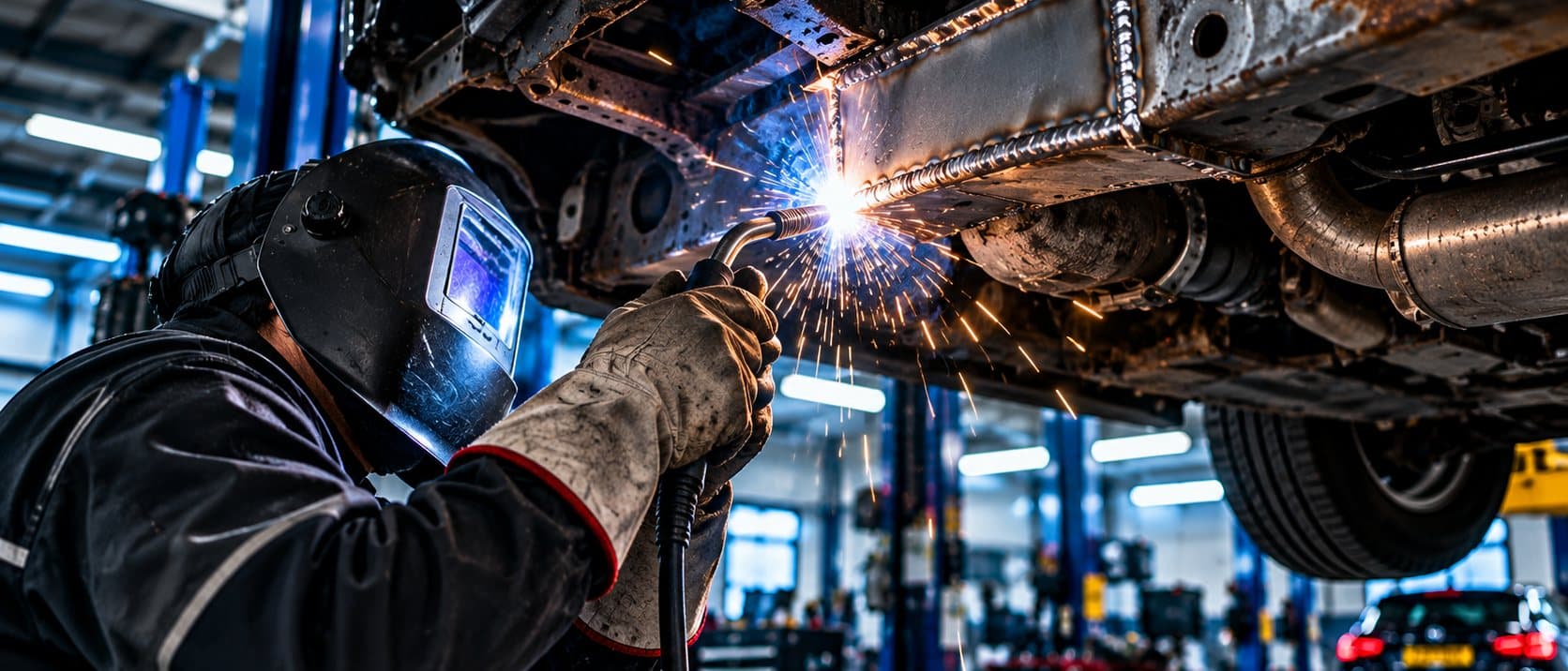
The manual is specific about repairs. Appendix A says repairs to structural components must be properly carried out and appear to be as strong as the original structure. A spot-welded repair is only acceptable where the original section was spot welded and that section has been removed, and stitch or plug welding can take the place of spot welding there. In all other circumstances, patch repairs must be continuously seam welded.
In plain terms, the rotten metal is cut out, a new section is shaped to fit and welded along its whole edge, not tacked at the corners. Some manufacturer-recommended methods such as MIG brazing, or adhesive bonding with riveting, are acceptable unless clearly inadequate. If the tester is not sure what the method of repair is, the manual tells them to pass and advise.
The flip side is in the defect wording: section 6.1.1 fails a main load-bearing member that is inadequately repaired such that the rigidity of the assembly is significantly reduced, and every prescribed area is failed if inadequately repaired. A bad repair counts the same as the rust it was meant to cure.
Why plates and filler fail
Appendix A lists the bonding processes the tester cannot accept for repairs to load-bearing members: gas brazing, soldering, adhesive bonding, fibre reinforcement and body filler. Fibreglass over a sill, filler over a floor hole and underseal sprayed over the lot are all fails in a prescribed area, no matter how smooth they look. The manual also says repairs to non-metallic structures in prescribed areas are not acceptable.
Plating is the grey area people ask about most. A plate welded over rusty metal rarely meets the test: the corroded metal is still there behind it, so the repair does not appear as strong as the original, and a plate tacked on at a few points is not continuously seam welded. The honest fix is to cut back to clean metal and let in a properly welded section.
Welding repairs in our own workshop in Harehills
NHG Vehicle Care carries out welding repairs in its own workshop at Unit 2, 2 Dolly Lane, Harehills, Leeds, alongside Class 4 and Class 7 MOT testing. That matters with corrosion, because the person who found the soft sill on the ramp can show you what needs cutting out, repair it to the standard in the manual and retest the car without sending it anywhere else.
If your car has failed on corrosion, has an advisory for rust you want sorted before it becomes a fail, or you have found a soft spot under the carpet, call 0113 244 3544 or request a booking online. We are open Monday to Friday, 8:30am to 5:30pm.